084 Travailleurs Manouba, Tunisie 

Bookkeeping

How to Use Form 941 to Pay Quarterly Payroll Taxes

what is a 941

If you discover an error on a previously filed Form 941, or if you otherwise need to amend a previously filed Form 941, make the correction using Form 941-X. For more information, see the Instructions for Form 941-X, section 13 of Pub. For the latest information about developments related to Form 941 and its instructions, such as legislation enacted after they were published, go to IRS.gov/Form941.

what is a 941

How to automate Form 941 filing

what is a 941

Also attach a statement to your return showing the name of the person keeping the payroll records and the address where those records will be kept. Don’t use Form 941 to report backup withholding or income tax withholding on nonpayroll payments such as pensions, annuities, and gambling winnings. Report these types of withholding on Form 945, Annual Return of Withheld Federal Income Tax. Report unemployment taxes on Form 940, Employer’s Annual Federal Unemployment (FUTA) Tax Return. If you file Form 941 electronically, you can e-file and use EFW to pay the balance due in Certified Bookkeeper a single step using tax preparation software or through a tax professional.

When is Form 941 due?

You can ask your accountant or payroll manager to do this for you. Returns via mail must be addressed correctly, have enough postage and be postmarked by the U.S. Postal Service to one of these listed addresses (varies based on state). If you reported less than $50,000, then you must make monthly deposits. If you reported more than that, you need to make deposits twice a week. The new owners and you must both file Form 941 for the quarter when the transfer happened.

what is a 941

Do I have to file a Form 941 if I have no employees?

  • Your quarterly Form 941 may be filed electronically or via paper.
  • If you’re an employer, you typically must withhold and remit federal income, Social Security, and Medicare taxes from employee wages.
  • Filing a Form 941-X before filing a Form 941 for the quarter may result in errors or delays in processing your Form 941-X.
  • The IRS also charges interest on penalties, calculated based on the day the taxes were due.

It also comes with a payment voucher, which you must submit with the form when sending a payment by mail. You’ll need to enter your business name and employer identification number (EIN) at the top of every page. Note that you are not responsible for withholding employment taxes or paying Social Security and Medicare if you hire independent contractors. You are not considered the employer of an independent contractor. This blogpost only scratched the surface on IRS Form 941.

  • Timely and accurate filing of Form 941 can help you avoid costly penalties and interest charges.
  • This share of social security and Medicare taxes isn’t withheld from employees.
  • Identifies seasonal employers who don’t file a 941 form every quarter.
  • These broken-down numbers should add up to the total tax liability for the quarter.
  • Either they can choose to go with the traditional paper filing methods or electronic filing.
  • Form 941 is just one of the many tasks that organizations must take on as they grow their staff and expand their operations stateside.

Oyster is a global employment platform designed to enable visionary HR leaders to find, engage, pay, manage, develop, and take care of a thriving distributed workforce. Oyster lets growing companies give valued international team members the experience they deserve, without the usual headaches and expense. Depending on your state and business, you might also be able to electronically file Form 941. Keep in mind that the IRS might waive certain penalties if you have reasonable cause for filing late. The following will discuss certain instructions on e-filing Form 941 and the uses of the Employer’s Quarterly Federal Tax return, Form 941. As digital assets continue to gain prominence in financial markets, the IRS has introduced new regulations that will fundamentally change how these transactions are tracked and reported.

what is a 941

What is Form 941 used for?

  • For the IRS mailing address to use if you’re using a PDS, go to IRS.gov/PDSstreetAddresses.
  • When businesses report the tax withholdings and the compensations, the IRS gains insights into the financial performance of an entity for that quarter.
  • The term legal holiday means any legal holiday in the District of Columbia.
  • Otherwise, you will owe additional penalties, ranging from 5% to 25% of the amount due.

Where you file Form 941 depends on your state and whether or not you make a deposit with your filing. Check out the IRS’s website to find out where you need to mail your form. Form 941 can be filed by paper and through e-filing methods. However, an amended version of this return, Form 941X cannot be e-filed and must be drafted and mailed to the IRS through the paper filing method. Delve into the complexities of the evolving tax landscape and political shifts impacting your firm.

150 150 ikigaitn_stafalu

IRS Form 941: What Is It?

what is a 941

This gives you one month to prepare and submit Form 941 to https://www.pinterest.com/jackiebkorea/personal-finance/ the IRS. If the due date falls on a holiday or a weekend, the adjusted due date is the next business day. For example, if April 30 falls on a Saturday, the due date for an April 30 payment would be Monday, May 2. Check “yes” in Part 4 if you have authorized a third party (such as a tax consultant or financial professional) to speak with the IRS on your behalf and, if so, provide their information.

what is a 941

If You’re a Seasonal Employer . . .

  • That said, you must deposit all funds owed to the IRS electronically, ideally via the EFTPS.gov service.
  • When it comes to filing Form 941 with ease and accuracy, having the right tools at your disposal can make all the difference.
  • It’s crucial to know how to fill out this tax form correctly and file it on time to avoid penalties and other problems.
  • Note that you are not responsible for withholding employment taxes or paying Social Security and Medicare if you hire independent contractors.
  • The payroll tax credit election must be made on or before the due date of the originally filed income tax return (including extensions).
  • Check the second box on line 16 and enter your tax liability for each month in the quarter.

All rates, fees, and terms are presented without guarantee and are subject to change pursuant to each provider’s discretion. Estimated APR includes all applicable fees as required under the Truth in Lending Act. The actual loan terms you receive, including APR, will depend on the provider you select, their underwriting criteria, and your personal financial factors. The loan terms and rates presented are from the listed providers and not by SoFi Lending Corp. Please review each provider’s Terms and Conditions for additional details.

what is a 941

When is Form 941 due?

  • You remain responsible if the third party fails to perform any required action.
  • Certification as a CPEO may affect the employment tax liabilities of both the CPEO and its customers.
  • Employers who exceed the eligibility threshold must not file Form 941 until the IRS notifies them that their filing requirement has been changed to Form 941.
  • Manay CPA is a reputable, full-service CPA firm based in Atlanta, Georgia.
  • Federal law requires employers to withhold certain taxes from the pay of employees.

For additional filing requirements, including information about attaching a statement to your final return, see If Your Business Has Closed, earlier. Adjusting tax liability for the qualified small business payroll tax credit for increasing research activities (line 11). To make sure businesses comply with federal tax laws, the IRS monitors tax filings and payments by using a numerical system to identify taxpayers. A unique nine-digit EIN is assigned to all corporations, partnerships, and some sole proprietors. Businesses needing an EIN must apply for a number and use it throughout the life of the business on all tax returns, payments, and reports. Generally, an EFT is made using the Electronic Federal Tax Payment System (EFTPS).

  • Note that your total tax liability for the quarter must equal your total taxes shown on line 12.
  • If you don’t file Form 941 by the deadline, you may incur a penalty of 5 percent of the tax due with that tax return for each month or part of a month when the return is late.
  • Time spent and out-of-pocket costs are presented separately.
  • For additional filing requirements, including information about attaching a statement to your final return, see If Your Business Has Closed, earlier.
  • If you reported $50,000 or less in taxes during the lookback period, you’re a monthly schedule depositor unless the $100,000 Next-Day Deposit Rule discussed in section 11 of Pub.
  • Businesses that don’t have employees don’t have to file the 941 form.

What information is on Form 941?

Generally, any person or business that pays wages to an employee has to file a Form 941 each quarter and needs to continue to do so even if there are no employees during some of the quarters. Exceptions to this filing requirement are for seasonal employers who don’t pay employee wages during one or more quarters, employers of household employees and employers of agricultural employees. Employers of agricultural employees typically file Form 943 instead of Form 941.

what is a 941

what is a 941

Generally, employers are required to deposit their employment taxes rather than pay the taxes when the Form 941 or Form 944 is filed. For the rules for making deposits, refer to Publication 15 (Section 11, Depositing Taxes) and Topic no. 757. Employers may be eligible to file Form 944 if their estimated annual employment tax liability is $1,000 or less. If an employer’s employment tax liability is expected to be $1,000 or less and the employer wants to file Form 944 and did not indicate this on the Form SS-4, the employer must contact the IRS to request to file Form 944.

150 150 ikigaitn_stafalu

How to Prepare a Statement of Retained Earnings: A Step-by-Step Guide with Example

the statement of retained earnings reports:

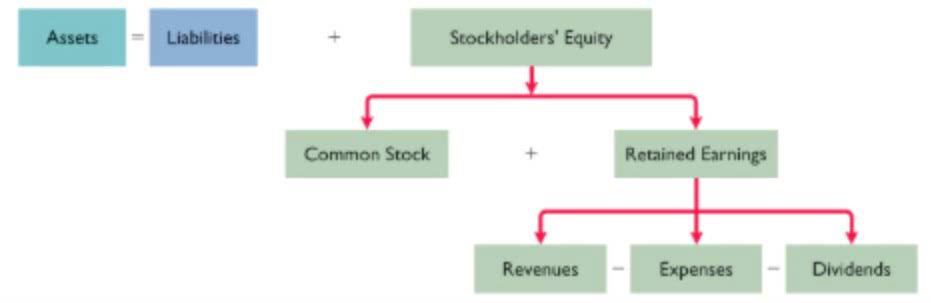
Now, their collective impact crystallizes into one defining number—your ending retained earnings. It’s the springboard for the period’s financial narrative and reflects the previous period’s endgame. For those who’ve been in the financial reporting game, this familiar number is your last performance’s curtain call, carried forward as the opening act for the new period. If this is your debut statement, then you’re starting from scratch—your opening balance is zero. Retained earnings are made up of net income (the profit the company has made) minus dividends (the portion of profits paid out to shareholders).

Create a free account to unlock this Template

  • It serves to show the changes in retained earnings throughout the accounting period.
  • As you can see there is a heavy focus on financial modeling, finance, Excel, business valuation, budgeting/forecasting, PowerPoint presentations, accounting and business strategy.
  • Retained earnings, on the other hand, represent the accumulated net income over multiple accounting periods that have not been paid out as dividends.
  • The Income Statement shows the company’s profit and loss over a specific period, and retained earnings can be calculated from this information.
  • It’s like having a secret stash that you can whip out when you want to invest in or boost your business, without the need for external funding or taking on more debt.
  • These reports assure external parties that the company’s financial statements are reliable and adhere to the appropriate standards.

They use it as a yardstick to measure the company’s prosperity and strategic financial decisions over time. Moreover, it’s one of the documents that investors scrupulously analyze when they want to gauge the company’s future profit potential. The statement of retained earnings is closely connected to other financial statements, such as the balance sheet, income statement, and statement of cash flows. Retained earnings are typically a component of the equity section on the balance sheet, and they can be affected by the net income reported in the income statement. Additionally, events like dividend payments, which are part of cash flows, can impact the statement of retained earnings.

the statement of retained earnings reports:

The Relationship Between Net Income and Retained Earnings

The statement of retained earnings is a crucial financial document that tracks the cumulative earnings retained by a company over time. By understanding and effectively managing retained earnings, businesses can reinvest in growth opportunities, pay down debt, and improve overall financial stability. Net income represents recording transactions the company’s profits after all expenses and taxes have been deducted. If a net loss occurs, instead of adding, it should be deducted from the retained earnings balance. If a company is profitable and decides to maintain a portion of its profits, it will credit the retained earnings account. On the other hand, if a company incurs a loss or distributes dividends to shareholders, the retained earnings account is debited.

the statement of retained earnings reports:

What type of account is a retained earnings account?

the statement of retained earnings reports:

In contrast, a retained earnings statement focuses solely on the changes in retained earnings over a specific accounting period. The calculation of retained earnings starts with the beginning balance, followed by adding the net income and subtracting dividends, if any. This final amount represents the ending retained earnings for the period, which can Bookstime also be found on the balance sheet under shareholders’ equity. The Statement of Retained Earnings is akin to a financial report card for companies. It serves as a clear indicator of a company’s financial health and indicates how much profit has been kept on the books over a specific period. This statement can signal either growth potential or a warning bell of upcoming financial troubles, making it a crucial document for investors, shareholders, and directors alike.

the statement of retained earnings reports:

the statement of retained earnings reports:

Retained earnings to market value isn’t as commonly used as retention and payout ratios, but it does provide insights into how effectively a company is using its retained earnings. To predict growth, you need leading indicators like the management’s guidance on future plans and, of course, the amount of money the company has retained over the previous periods to support that future growth. In theory, retained earnings should keep accumulating as long as a company remains profitable and doesn’t declare dividends. Understanding the difference is key in making effective business decisions and conveying a truthful financial picture to stakeholders. On the dividend front, Widget Inc. opts for a modest share, keeping a part of the earnings close to the statement of retained earnings reports: its chest for reinvestment, a balancing act between shareholder satisfaction and corporate strategy.

  • This statement provides insights into how a company’s management decides to allocate earnings between dividends and reinvestment.
  • It’s a narrative you write with care, knowing each chapter influences the future of the company.
  • The statement of retained earnings plays a crucial role in a company’s financial management, particularly related to debt obligations.
  • To ensure you have a crystal-clear understanding of the retained earnings calculation process, let’s walk through Zippy Tech’s example, step by step.
  • Busting this myth is crucial for shareholders and financial analysts who may otherwise overestimate the immediate financial potency of a company.
  • The net income amount in the above example is the net profit line item, which is $115,000.

Retained earnings often enjoy a reputation as a marker of a company’s wealth, but grab your myth-busting gear because it’s not quite the financial fortress it’s rumored to be. In essence, retained earnings are a reflection of your company’s success story and foresight. They suggest a trajectory that piques the interest of those looking to invest in a company on the upswing. What this finale tells us is that Widget Inc. is managing to grow its financial backbone, enhancing its ability to invest in future endeavors, or perhaps even weather economic downturns. This bottom line is not mere scribbles in a ledger; it’s the quantitative measure of Widget Inc.’s fiscal discipline and its strategic dexterity. Let’s walk you through how Widget Inc.’s retained earnings come to life from mere numbers on a ledger.

150 150 ikigaitn_stafalu

What is a Statement of Retained Earnings Business Overview

the statement of retained earnings reports:

A company’s capital allocation strategy determines how net income and paid-in capital will be employed to maximize shareholder value. Internal reinvestment of earnings forms a vital component of this strategy, as companies must evaluate the trade-offs between retaining earnings and paying dividends to shareholders. By carefully examining the statement of retained earnings, investors can gain valuable insights into a company’s performance, financial health, and strategic priorities.

The Retained Earnings Formula

On the other hand, when a company experiences growth in its retained earnings, it often indicates a reinvestment of profits into the business or potential for future dividend payments. As retained earnings increase, so does shareholders’ equity, resulting in a greater net book value of the company’s equity. Retained earnings are a critical component of a company’s equity that reflects the cumulative profits kept in the business after distributing dividends to shareholders. This financial figure is not a stagnant value but changes over accounting periods as the company earns more profits or incurs losses. Retained Earnings are reported on the balance sheet under the shareholder’s equity section at the end of each accounting period.

the statement of retained earnings reports:

Capital Allocation Strategy

Dividends are distributions of the company’s profits to its shareholders, decreasing the retained earnings balance. In financial modeling, it’s necessary to have a separate schedule for modeling retained earnings. The schedule uses a corkscrew-type calculation, where the current period opening balance is equal to the prior period closing balance. In between the opening and closing balances, the current the statement of retained earnings reports: period net income/loss is added and any dividends are deducted. Retained Earnings (RE) are the accumulated portion of a business’s profits that are not distributed as dividends to shareholders but instead are reserved for reinvestment back into the business.

the statement of retained earnings reports:

What is the Retained Earnings Formula?

  • In essence, retained earnings are a reflection of your company’s success story and foresight.
  • It also shows how much these retained earnings have been affected by dividend payments or other shareholder distributions.
  • That amount is added to the original $100,000 for a new total retained earnings of $130,000.
  • This post will walk step by step through what retained earnings are, their importance, and provide an example.
  • It’s a number that tells a story, so make sure it’s penned with precision and clarity.
  • They’re reported on the income statement as a subtraction from net income and not as an expense because they’re not tax-deductible.
  • It’s often an alert to investors and managers to review the company’s financial health and strategies.

This statement details changes in retained earnings over a specific period, typically one year, and shows how the company’s profits have fixed assets been managed. The statement of retained earnings is a financial statement that reports the changes in a company’s retained earnings account over a specific period of time. It provides information on the amount of net income that was retained by the company, as well as any dividends paid to shareholders or other adjustments that affected the retained earnings balance.

the statement of retained earnings reports:

Best Accounting Courses For Upskilling In 2024

the statement of retained earnings reports:

The statement of retained earnings is primarily used to assess the management’s future outlook for the business. For example, any common Bookkeeping for Chiropractors stock you buy back during the year should be deducted from the earnings. Similarly, if you’ve decided to pay dividends, subtract dividends from the retained earnings.

This reflects the accounting principle that increases in equity, such as profits kept within the company, and credits, while decreases in equity, such as losses or dividends, are debits. Your beginning retained earnings are the funds you have from the previous accounting period. Dividends paid is the amount you spend on your company’s shareholders or owners, if applicable. The statement of retained earnings is also known as the statement of owner’s equity, equity statement, or statement of shareholders’ equity.

the statement of retained earnings reports:

This figure is the retained earnings you reported at the end of the previous period and serves as the launching pad for the current period’s calculations. Retained earnings are not an asset but reflect the shareholder’s equity in a business. The statement of retained earnings—what we’re focusing on today—tells you how much of the current year’s earnings were distributed as dividends and reinvested into the business. The RE balance may not always be a positive number, as it may reflect that the current period’s net loss is greater than that of the RE beginning balance. Alternatively, a large distribution of dividends that exceed the retained earnings balance can cause it to go negative.

  • The company has worked hard throughout the year, leading to a well-earned net income of $10,000.
  • In between the opening and closing balances, the current period net income/loss is added and any dividends are deducted.
  • A statement of retained earnings is a financial document that outlines the changes in a company’s retained earnings over a specific accounting period.
  • The statement of retained earnings is a key financial document giving insight into how a company has utilized their profits from inception.

You’ll add profits, or deduct losses, to calculate how much wealth stays in the company’s pocket. This calculation demonstrates how retained earnings are adjusted over each financial period, reflecting the business’s ongoing financial activity. Contrary to common misconceptions, retained earnings are not a pool of cash but an expression of how much of the company’s earnings have been reinvested in the business or kept as a reserve. The statement of retained earnings is generally more condensed than other financial statements. Based on the amount of net income earned, your company might decide to pay a certain portion to shareholders as dividends.

150 150 ikigaitn_stafalu

Dividend Payout Ratio Definition, Formula, and Calculation

Jackeline is considering investing in Cherry Water Company and needs you to calculate the dividend payout ratios. This company has 10,000 shares of common stock outstanding since the start and does not have shares of preferred stock. Cherry Waer Company has been in business for three years and is growing steadily. At the end of each of the three years, the company has recorded a net income of $100,000, $500,000, and $1,000,000 respectively. The dividends paid for the three years are $0.50 per share, $4.00 per share, and $10.00 per share.

MarketBeat Products

These companies generally pay a larger dividend than growth companies that put most of their profits back into the company. The dividend payout ratio tells you what percentage of a company’s earnings pay out as a dividend. The retention ratio tells you the percentage of that company’s profits being retained or reinvested in the company. Real estate investment trusts (REITs) and master limited partnerships (MLPs) present investors with a special case. The business model for these companies requires that they pay a significant percentage of their earnings back to shareholders as a dividend.

Forecast Retained Earnings Using the Payout Ratio

But while dividend yield provides insights into market price, the payout ratio provides insights into profitability and cash flow. The MarketBeat dividend payout ratio calculator will calculate the dividend payout ratio when you enter the annual per share amount a company pays as a dividend and the company’s earnings per share over a period of time. However, as the formula shows, the denominator for the dividend yield formula is a company’s share price. Many companies that pay dividends tend to have less volatile stock prices, but any increase in share price will reduce the dividend yield percentage and vice versa. A 60% payout ratio means that the company distributes 60% of its net earnings to shareholders as dividends, retaining the remaining 40% for reinvestment or other purposes. The figures for net income, EPS, and diluted EPS are all found at the bottom of a company’s income statement.

So if you want to find the ratio in the usual way, you need to have access to both income statements and cash flow statements. Many investors use the dividend yield to measure the strength of a dividend, but a better measurement may be the dividend payout ratio. Looking at the last dividend payout ratio formula, the investors get ensured about how much they may receive in the near future.

The dividend payout ratio provides a measurement of earnings paid by a company to its shareholders in the form of dividends. The amount not paid to shareholders is retained by the company to pay off debt or to reinvest in its core operations. The dividend payout ratio is sometimes simply referred to as the payout ratio.

  • Rather, it is used to help investors identify what type of returns – dividend income vs. capital gains – a company is more likely to offer the investor.
  • The dividend payout ratio is useful for the assessment of dividend sustainability.
  • All you have to do is look at the dividend payout ratio on each stock’s dividend page.

Global Banks – Stable Dividend Ratio Analysis

On the other hand, an older and established company that returns a small allowance of money to shareholders would test the patience of investors and has the tendency of tempting activists to intervene. An example is Apple, this company started paying dividends in 2012 after about twenty years since it last made dividend payments. It was when the new CEO felt that the enormous cash flow of the company made a 0% payout ratio difficult to justify. Since it implies that the company has moved further than its initial growth stage, a high payout ratio implies that share prices are unlikely to appreciate in a rapid manner. The dividend payout ratio can be calculated as the yearly dividend per share divided by the earnings per share (EPS), or equivalently, or divided by net income dividend payout ratio on a per share basis. In this case, the formula used is dividends per share divided by earnings per share (EPS).

The items you’ll need to calculate the dividend payout ratio are located on the company’s cash flow and income statements. Of note, companies in older, established, steady sectors with stable cash flows will likely have higher dividend payout ratios than those in younger, more volatile, fast-growing sectors. The dividend payout ratio indicates the amount shareholders get back in the form of percentage returns from the overall profit that the company earns.

If the earnings of a company are increasing, it may be in a position to increase its dividend in the future. The importance will be further elaborated upon in the latter part of this article. We will also look at how to calculate the dividend payout ratio and the formula.

It is often in its interest to do so because investors will expect a dividend. For instance, insurance company MetLife (MET) has a payout ratio of 72.3%, while tech company Apple (AAPL) has a payout ratio of 14.6%. My Accounting Course  is a world-class educational resource developed by experts to simplify accounting, finance, & investment analysis topics, so students and professionals can learn and propel their careers. The takeaway is that the motivations behind an investor base of a company are largely based on risk tolerance and the preferred method of profit. Hence, public companies are typically very reluctant to adjust their dividend policy, which is one reason behind the increased prevalence of share buybacks.

dividend payment ratio formula

Advanced Stock Screeners and Research Tools

The dividend payout ratio is a calculation that identifies what percentage of a company’s earnings that it is paying out in the form of a dividend. The payout ratio is an important metric to determine whether a company is paying a sustainable dividend that is not likely to be cut in the future. This tool can be used to calculate the dividend payout ratio of any public company.

Dividend payout ratio discloses what portion of the current earnings the company is paying to its stockholders in the form of dividend and what portion the company is ploughing back in the business for growth in future. It is computed by dividing the dividend per share by the earnings per share (EPS) for a specific period. The dividend payout ratio is the opposite of the retention ratio which shows the percentage of net income retained by a company after dividend payments. The payout ratio indicates the percentage of total net income paid out in the form of dividends.

Example of dividend payout ratio and calculation

  • Let’s look at a practical example of dividend ratio calculation.Danny Inc. has been in the business for the last few years.
  • Sometimes, companies will also simplify things and list the per-share inputs needed on their income statements or key financial highlights.
  • Below is a break down of subject weightings in the FMVA® financial analyst program.
  • Historically, companies in the telecommunication sector have been viewed as a “safe haven” for investors pursuing a reliable, dividend-based stream of income.
  • The retention ratio, also known as the plowback ratio, is the inverse of the dividend payout ratio, indicating the percentage of earnings retained for reinvestment.
  • There are several considerations to take in the course of interpreting the dividend payout ratio, the company’s level of maturity is an important factor.

EPS represents net income minus preferred stock dividends divided by the average number of outstanding shares over a given time period. One other variation preferred by some analysts uses the diluted net income per share that additionally factors in options on the company’s stock. As earlier stated, we can use the formula to achieve the same result on a total share basis. Here, we divide the total dividends paid for the year by the net income to calculate the dividend payout ratio for each year. We can calculate the total dividends paid by multiplying the dividend per share by the number of shares outstanding.

Well established companies usually have a good consistent dividend payout ratio. A growth investor interested in a company’s expansion prospects is more likely to look at the retention ratio, while an income investor more focused on analyzing dividends tends to use the dividend payout ratio. To calculate the dividend payout ratio, the formula divides the dividend amount distributed in the period by the net income in the same period. Companies that make a profit at the end of a fiscal period can do several things with the profit they earn. They can pay it to shareholders as dividends, they can retain it to reinvest in the growth of their business, or they can do both. The portion of the profit that a 17 best san diego tax services company chooses to pay out to its shareholders can be measured with the payout ratio.

On the other hand, a company with a downward trend of payouts is alarming to investors. For example, if the ratio of a company has fallen by a percentage each year for the previous five years, this might be an indication that the company can no longer afford to pay such high dividends. Generally, companies that are more mature and stable tend to have a higher ratio than new start-up companies. Dividend payouts vary widely across industries and just like most ratios, they are most useful to compare within a given industry.

Conversely, some companies want to spur investors’ interest so much that they are willing to pay out unreasonably high dividend percentages. Inventors can see that these dividend rates can’t be sustained very long because the company will eventually need money for its operations. If you know the Net Income and Retained Earnings, you would easily be able to find out the dividend ratio of the company (if any). Just deduct the retained earnings from the net income and divide the figure by net income. To practically apply this ratio, you need to go to the company’s income statement, look at the « net income, » and find out if there are any « dividend payments. »

That may indicate that the dividend growth and payout ratio will decline in subsequent years. This focus on share price can make dividend yield an imperfect measure of dividend health for many investors. Then, considering the payout ratio is equal to the dividends distributed divided by the net income, we get 25% as the payout ratio. The retained earnings equation consists of net income minus the dividends distributed, thereby the retained earnings for Year 0 is $150m. To interpret the ratio we just calculated, the company made the decision to payout 20% of its net earnings to its shareholders via dividends.

150 150 ikigaitn_stafalu

Dividend Payout Ratio Analysis Formula Example Calculation

Below is the list of Global Banks, along with their Market Capitalization and Payout Ratio. But the computation method of the dividend payout ratio would be different. Get instant access to video lessons taught by experienced investment bankers. Learn financial statement modeling, DCF, M&A, LBO, Comps and Excel shortcuts. Once announced, the type of investors purchasing these shares will shift towards risk-averse, long-term investors, as the risk profile of the company becomes more closely aligned with such investors’ investment criteria. For example, Apple (AAPL) pays a $1.04 per share annual dividend as of June 9, 2025.

  • The dividend payout ratio measures the percentage of net income that is distributed to shareholders in the form of dividends during the year.
  • The dividend payout ratio can be calculated as the yearly dividend per share divided by the earnings per share (EPS), or equivalently, or divided by net income dividend payout ratio on a per share basis.
  • Generally, companies that are more mature and stable tend to have a higher ratio than new start-up companies.
  • A consistent trend in this ratio is usually more important than a high or low ratio.
  • A new growth-oriented company aiming at expansion, developing new products, and moving into new markets will be expected to reinvest most or all of its earnings.

Dividend Yield vs. Dividend Payout Ratio

Upgrading to a paid membership gives you access to our extensive collection of plug-and-play Templates designed to power your performance—as well as CFI’s full course catalog and accredited Certification Programs. CFI is the global institution behind the financial modeling and valuation analyst FMVA® Designation. CFI is on a mission to enable anyone to be a great financial analyst and have a great career path.

Both the total dividends and the net income of the company will be reported on the financial statements. For example, many investors prefer to consider a dividend payout ratio based on the earnings the company has already posted. The dividend payout ratio can give investors one clue about a company’s dividend sustainability. At Above the Green Line, we provide tools and insights to help you optimize your investment strategy. Whether you are focused on income generation or capital growth, understanding metrics like the dividend payout ratio is crucial. Explore our membership options to enhance your portfolio management and achieve your financial goals.

Dividend Payout Ratio Formula

In the second part of our modeling exercise, we’ll project the company’s retained earnings using the 25% payout ratio assumption. Not paying one can be an extremely negative signal about where the company is headed. Investors react badly to companies paying lower-than-expected dividends, which is why share prices fall when dividends are cut. If a company’s payout ratio is over 100%, it returns more money to shareholders in the year it earned and may be forced to lower the dividend or stop paying it altogether, since overpayment is likely to be unsustainable. The payout ratio is also useful for assessing a dividend’s sustainability. Companies are extremely reluctant to cut dividends because it can drive the stock price down and reflect poorly on management’s abilities.

Global Banks – Stable Dividend Ratio Analysis

As mentioned in the example, we will use two methods to calculate this ratio. If an investor looks at the company’s income statement, she would be able to find the net income for the year. So if you need to know how the company has calculated the retained earnings and dividends, you can check the footnotes under the financial statements. Simply put, the dividend payout ratio is the percentage of a company’s earnings that are issued to compensate shareholders in the form of dividends. Often referred to as the “payout ratio”, the dividend payout ratio is a metric used to measure the total amount of dividends paid to shareholders in relation to a company’s net earnings. While the dividend yield is the more commonly known and scrutinized term, many believe the dividend payout ratio is a better indicator of a company’s ability to distribute dividends consistently in the future.

dividend payment ratio formula

The dividend payout ratio indicates a dividend’s sustainability based on how much of its earnings a company pays in big tax changes for musicians in 2018 dividends. Many growth-oriented investors prefer profits to be reinvested or used for buybacks. This is because investors gain from prices that are not taxed until after the sales of the shares, while dividends are taxed in the year they are received. Conversely, some companies want to spur the interest of investors so much that they are willing to pay out unreasonably high dividend percentages. Here, it is easy for investors to see that the company cannot sustain these dividend rates for a long time because it will eventually need money to finance its operations. Both the terms help investors determine their earnings per share so that they know the final income they would generate from the investments they make.

  • Companies are oftentimes reluctant to cut down dividends since it can drive the stock price down and reflect poorly on the abilities of the management.
  • As dividend payment is not an expense, it should not reduce the earnings by any means.
  • While many investors are focused on the dividend yield, a high yield might not necessarily be a good thing.
  • First, dividend payment for the year would not come in the Income statement of the company.

How the dividend payout ratio is used

The Dividend Payout Ratio is the proportion of a company’s net income that is paid out as dividends as a form of compensation for common and preferred shareholders. Several considerations go into interpreting the dividend payout ratio—most importantly, the company’s level of maturity. The dividend payout ratio reveals a lot about a company’s present and future situation. To interpret it, you just have to know how to look at it as well as what your priorities are as an investor.

The dividend yield represents the return on investment through dividends as a percentage of the current stock price. While the dividend payout ratio shows the proportion of earnings paid out as dividends, the dividend yield focuses on the income relative to the stock price. A high yield can be attractive, but if paired with a high payout ratio, it may signal an unsustainable dividend that could be at risk of being cut. The dividend payout ratio (DPR) is a key metric for assessing a company’s financial health and its commitment to returning profits to shareholders. This ratio helps you determine how earnings are allocated between dividends and growth. This article will explore the definition, formula, and practical applications of the dividend payout ratio, providing clarity on its significance in investment decisions.

Before we go further, let us look at what a dividend payout ratio is and its use in valuing a business. The negative dividends ratio happened when the company paid dividends even when the company made a loss. This is certainly not a healthy sign as the company will have to use the existing cash or raise further capital to pay dividends to the shareholders.

A low dividend payout ratio means the company is keeping a large portion of its earnings for growth in future and a high payout ratio means the company is paying a large portion of its earnings to its common shareholders. For example, real estate investment trusts (REITs) are legally obligated to distribute at least 90% of earnings to shareholders as they enjoy special tax exemptions. Master limited partnerships (MLPs) tend to have high payout ratios, as well. The dividend payout ratio can be calculated as the yearly dividend per share divided by the earnings per share (EPS), or equivalently, the dividends divided by net income (as shown below).

📆 Date: June 28-29, 2025🕛 Time: 8:30-11:30 AM EST📍 Venue: OnlineInstructor: Dheeraj Vaidya, CFA, FRM

First, they decide how much they will reinvest into the company to grow bigger, and the business can multiply the shareholders’ money instead of just sharing it. There is no target payout ratio that all companies in all industries and of varying sizes aim for because the metric varies depending on the industry and the maturity of the company in question. Instead, such investors seek to profit from share price appreciation, which is largely a function of revenue growth and margin expansion, among many important factors. Companies with high growth and no dividend program tend to attract growth investors that actually prefer the company to continue re-investing at the expense of not receiving a steady source of income via dividends.

In order to help you advance your career, CFI has compiled many resources to assist you along the path. Below is a real-life example of all three calculations using the energy giant Chevron and its 10-K statement for the fiscal year 2021. Shaun Conrad is a Certified Public Accountant and CPA exam expert with a passion for teaching.

The retention ratio is the percentage of profits the company keeps for reinvestment. If anyone of the above is nil (among retained earnings and dividend payments), the entire profit is distributed or invested in the other. Calculating the retention ratio is simple, by subtracting the dividend payout ratio from the number one. The two ratios are essentially two sides of the same coin, providing different perspectives for analysis. Investors use the ratio to gauge whether dividends are appropriate and sustainable.

150 150 ikigaitn_stafalu

About Us Brookings, South Dakota Gravel Crushing Asphalt Production Paving

brookings sd construction bookkeeping

Accounting and tax work doesn’t have to be painful, time consuming  and expensive. I promise to provide you with the best service you have ever experienced at a price you can afford. If you  don’t have time to deal with your accounting, let me worry about it for you! Get more details on my qualifications and Winnie’s  by clicking below.

brookings sd construction bookkeeping

Meet Our Team

He has served as a proud member of the Army National Guard 740th Company Transportation Unit since 2008. Our QuickBooks Online support service can assist you with any installation, setup or operation assistance you might need. In addition, our support is not limited just to the software part of it, but we can also provide accounting and payroll assistance.

Bookkeeping & Payroll

brookings sd construction bookkeeping

1994 was the full circle moment for Bowes Construction when both children returned home and joined the company as full-time employees. October brought Jason home from the USMC with an Honorable Discharge to undertake the laydown operations in the field. A true family business was now underway as it took everyone doing what it takes to get the job done. It was around this time in 1991, that an opportunity of unknown potential was presented to Lyle by a loyal customer, Shorty Wyland. Our company and employees have a deep commitment to serve and support our community.

Big Firm Services. Small Firm Attention.

brookings sd construction bookkeeping

Established in 1978, we are a family built company, with a dedicated team of construction professionals that focuses on quality from concept to completion. We deliver on our promise to build quality projects and relationships, utilizing our team’s strong core values and a desire to succeed. Barb brings several years of administrative assistance experience to the firm. Outside of work she relaxes by crafting and enjoys spending time with family, which includes two beautiful granddaughters. Tara grew https://www.inkl.com/news/the-significance-of-construction-bookkeeping-for-streamlining-projects up in Watertown, SD and graduated from Watertown High school in 2020. Tara will receive her Financial Services degree in Business Accounting from Lake Area Technical College in 2024.

We work one-on-one with you to create customized solutions and processes that allow you to identify opportunities and minimize risk. Our affordable, comprehensive small business bookkeeping services let you focus on running and growing your business. It is all part of our firm’s promise to provide each of our clients with PEACE, HOPE AND EFFICIENCY.

  • Barb brings several years of administrative assistance experience to the firm.
  • This business has not enabled messaging on Yelp, but you can still contact other businesses like them.
  • Soon the family extended further with grandchildren Cole Schneider, Logan Bowes, Jaxon Bowes, Erica Peterson, and Elexa Peterson.
  • Bella grew up in Huron, SD and graduated from Huron High School in 2022.

The information used for preparing a compiled financial statement is provided by an organization’s management and has not been audited or reviewed. Steen Bookkeeping Service The Significance of Construction Bookkeeping for Streamlining Projects is a professional firm based in Brookings, SD, specializing in providing comprehensive bookkeeping solutions for businesses of all sizes. Always looking forward, the 3rd generation is beginning to make their presence known.

brookings sd construction bookkeeping

While weighing trucks at our gravel resource south of Brookings, Marcia would meet a newly hired truck driver from DeSmet, SD. A recent Honorably Discharged Army Veteran of Vietnam, Lyle Bowes was decorated with, among other awards, the Bronze Star Medal with the V device for Valor. We keep honesty and fairness at the forefront of our business practices.

Construction Professionals

She received her Surgical Technology diploma from Southeast Technical Institute in 2013. Briana worked for a local clinic before joining VRS in June of 2017. As the office manager, she is required to oversee the front desk, as well as provide client assistance and general office support. Briana and her husband Kyle reside near Hayti with their children Braxton and Remi. In her free time, she enjoys camping, fishing and spending time with friends and family.

QuickBooks Online

Sherry has firm experience in reviews and compilations, accounting and advisory services and tax preparation. She lives in Watertown with her husband Lonnie, an engineer draftsman for Terex Utilities, and their son Brayden. In her free time, she enjoys attending sporting events, camping and spending time with her family. Briana grew up in Castlewood, SD and graduated from Castlewood School District in 2012.

150 150 ikigaitn_stafalu

Staff Accounting Firm in Brookings, Miller and Watertown, South Dakota

brookings sd construction bookkeeping

Danielle and her husband Josh have two daughters; Maliya and Havana. A 1997 graduate from South Dakota State University, Anna enjoys working with clients to design homes and multi–family developments with emphasis on functionality and curb appeal. Pre-planning to completion, she is involved in all aspects of Clark Drew Construction’s residential construction services. Anna is a member of the Boys & Girls Club of the Northern Plains Advisory board, supporter of Brookings Ranger Hockey, and outside of work, enjoys spending time with her family.

brookings sd construction bookkeeping

Anna Drew

We operate a small business so our taxes are more complicated than most. https://www.inkl.com/news/the-significance-of-construction-bookkeeping-for-streamlining-projects To contribute to the overall financial health of your business, you need to understand asset management and the concepts of capitalizing and depreciat… Save money, reduce taxes and set yourself up for success in 2025 with this end-of-year checklist. We are committed to helping professional service providers build successful enterprises. Avoid payroll filing issues and day-to-day processing by handing complex payroll work over to us. Fortunate to have been built on Tradition, Bowes Construction, Inc. was started as an Aggregate Production Company by Lyle and Marcia Bowes in January of 1975.

brookings sd construction bookkeeping

« Not your typical accountant, more like your devoted CPA companion!”

brookings sd construction bookkeeping

Randy brings 23 years of construction experience to our commercial construction team. A graduate from SDSU in Construction Management, his expertise in estimating, personnel management, and project scheduling, aides in the success of every project he is involved with. Randy has managed many types of projects, from state-of-the art laboratory spaces, complex steam construction bookkeeping distribution infrastructures, to a cinema complex. In his spare time, Randy enjoys participating in sporting events, hunting, and fishing. She received her Bachelor of Accounting degree in 2012 from Kuvempu University in India.

Online Portal

James is an active member of the Brookings Community as a City Planning and Zoning Commissioner, and a proud supporter many area groups, organizations, youth sports teams. Throughout the year, he enjoys attending his boy’s sporting activities, and Jackrabbit athletics. Bella grew up in Huron, SD and graduated from Huron High School in 2022. Bella will receive her Financial Services degree in Business Accounting from Lake Area Technical Institute in May 2024.

Watertown, SD

  • A graduate from SDSU in Construction Management, his expertise in estimating, personnel management, and project scheduling, aides in the success of every project he is involved with.
  • It is all part of our firm’s promise to provide each of our clients with PEACE, HOPE AND EFFICIENCY.
  • Her primary areas of focus include accounting services, income tax preparation and advisory services.
  • A 2008 graduate of South Dakota State University in Construction Management, Matt has expertise in managing Design-Bid-Build, Negotiated Sum, Guaranteed Maximum Price, and Design Build projects.
  • His work ethic, attention to detail, and organization led to his promotion to site superintendent in 2017.

Founded by Clark Drew Jr. in 1978, Clark Drew Construction is a family owned and operated commercial, residential, and concrete construction company. She currently attends Black Hills State University online for Business Administration. Alyssa joined VRS in January of 2024 as a Data Processing Specialist and assists clients with their payroll. In her free time, she enjoys spending time with her family and friends doing anything outdoors, travelling, baking, and playing a competitive game of Skip-Bo. Through his strong work ethic, Dalton always delivers a quality, on-time product.

  • He started working with his father Clark Drew, Sr. when he was a teenager, learning the construction business.
  • For over a decade, Limestone has provided companies the knowledge and assurance to run their businesses at peak efficiency.
  • She received her Financial Services degree in Business Accounting from Lake Area Technical College in 2022.
  • In his spare time he enjoys hunting and fishing, and spending time with his wife and new son.
  • Achievement, Brookings Rangers Hockey, CASA, and area wildlife conservation groups.
  • Briana and her husband Kyle reside near Hayti with their children Braxton and Remi.

Exciting events continued to take place in the years that followed with Miranda’s marriage to Eric Peterson and Jason’s marriage to RaeAnn Higbee. Soon the family extended further with grandchildren Cole Schneider, Logan Bowes, Jaxon Bowes, Erica Peterson, and Elexa Peterson. Although stressful for a small family business to take on an entity that would double the size of the company and volume of work, this acquisition would allow for many tremendous opportunities for BCI. It also allowed the surrounding area to experience all the benefits and advantages of asphalt, including cost effectiveness, longevity, and recycling ability. An asphalt producer and paver headquartered in Dell Rapids, Shorty was looking to sell his company andasphalt plant.

brookings sd construction bookkeeping

Construction Professionals

  • We operate a small business so our taxes are more complicated than most.
  • She worked in private accounting in the early years of her career.
  • He has both residential and commercial building experience, so he has a strong knowledge of the mechanics of construction.
  • Ash is a Watertown native and received his Bachelor of Accounting degree from the University of Minnesota Duluth in 2003.
  • In her free time, she enjoys camping, fishing and spending time with friends and family.
  • A true family business was now underway as it took everyone doing what it takes to get the job done.

Tim’s quality of work, and construction knowledge is the key to the success of any project he is involved with. Cordell received his Construction Management Degree in 2018 from SDSU. He has both residential and commercial building experience, so he has a strong knowledge of the mechanics of construction. Cordell works side-by-side with our project managers to ensure the projects run smoothly, safely, and on schedule. I created Integrity Accounting in an effort to give you a different accounting experience.

Meet Our Team

Danielle grew up on a farm in Lake Preston, SD and received her Bachelor of Science degree in Professional Accountancy from Black Hills State University. She began working in the accounting industry in 2006, joining VRS in November of 2007 and then became a shareholder of VRS in January of 2014. She is a licensed CPA in South Dakota, and has obtained the Accredited in Business Valuation (ABV) designation. Danielle is a member of the American Institute of Certified Public Accountants, and the South Dakota CPA Society. Her primary areas of focus include accounting services, income tax preparation and advisory services.

brookings sd construction bookkeeping

From the firm: Embracing year-end opportunities

Over the years her role in the office has evolved into helping clients with all aspects of accounting. As a Data Processing Specialist, she specializes in data processing, sales tax compliance, on-line software training and provides clients with interim bookkeeping assistance. Deb also assists VRS with information technology issues and keeps the office computer systems running and up to date. Deb and her husband Tim reside in Watertown and have two daughters; Terra and Taylor.

150 150 ikigaitn_stafalu

Price earnings P E ratio explanation, formula, example and interpretation

Financial news channels like CNBC, Fox Business, and financial sections of newspapers and news sites often provide updates on stock prices and market trends. Company-specific news such as product launches, mergers, acquisitions, how to calculate break and scandals can cause significant changes in stock prices. Market reactions to news events can be swift and substantial, highlighting the importance of staying informed about company developments and market news.

Price-Earnings Ratio: Definition

When more people are trying to buy a stock than sell it, the market price will rise. When more people are trying to sell a stock than buy it, the market price will fall. These actions may be driven by company assets, such as good or bad news released in a quarterly earnings report. Supply and demand can also be driven by non-financial factors, such as controversy about a CEO, new laws from the government, or natural disasters.

What Causes a Company’s Intrinsic Value to Be Different Than Its Market Value?

So while in theory, a stock’s initial public offering (IPO) is at a price equal to the value of its expected future dividend payments, the stock’s price fluctuates based on supply and demand. Many market forces contribute to supply and demand, and thus to a company’s stock price. For example, software companies have relatively high P/E ratios, since a fast growth rate is often expected. Conversely, insurance companies usually have lower P/E ratios since they typically do not grow as fast. The most common way to value a stock is to compute the company’s price-to-earnings (P/E) ratio. The P/E ratio equals the company’s stock price divided by its most recently reported earnings per share (EPS).

Calculating the P/E Ratio

Knowing the weighted average price you paid for each share of stock can help you determine how your investment is performing as a whole, relative to the current share price. You can use it to calculate a company’s market capitalization, which is the total value of all its shares. Market capitalization is one way to measure how big and successful a company is compared to others. The price-to-earnings ratio of Roberts is 10 which means company’s stock is selling for 10 times of its current EPS. Stating it another way, $1 of Roberts’ earnings currently has a market value of $10. For a lot of investors, calculating future stock price is the absolute Holy Grail of investing.

  • To find a company’s price-earnings ratio, divide its current share price by its per-share earnings.
  • Similarly, if the required rate of return is equal to the dividend growth rate, you would have to divide by zero (which is impossible).
  • It’s very important to note that a high price per share for a stock isn’t necessarily bad, and a low one isn’t always good.

The trailing P/E ratio is calculated by using the EPS number based on the actual earnings of immediate past 12-month period. According to formula, a stock with P/E ratio of 10 and current EPS of $2.50 would be selling for $20 per share. According to economic theory, the market price tends to move toward an equilibrium point at which the number of sellers, or supply, equals the number of buyers, or demand. Conversely, if the number of buyers falls or the number of sellers increases, the price tends to fall. Finally, as mentioned above, these models are only useful for valuing dividend-paying stocks. Many companies, especially growth companies or those in the technology sector, do not pay dividends.

Since it’s based on both trailing earnings and future earnings growth, PEG is often viewed as more informative than the P/E ratio. For example, a low P/E ratio could suggest a stock is undervalued and worth buying. However, including the company’s growth rate to get its PEG ratio might tell a different story. PEG ratios can be termed “trailing” if using historical growth rates or “forward” if using projected growth rates.

Large trades by these investors can create substantial price movements, especially in stocks with lower trading volumes. Another alternative is the price-to-sales (P/S) ratio which compares a company’s stock price to its revenues. This ratio is useful for evaluating companies that may not be profitable yet or are in industries with volatile earnings. Because a company’s debt can affect both share price and earnings, leverage can skew P/E ratios as well.

Another useful metric for valuing a stock or company is the price-to-book ratio. Price is the company’s stock price and book refers to the company’s book value per share. A company’s book value is equal to its assets minus its liabilities (asset and liability numbers are found on companies’ balance sheets). A company’s book value per share is simply equal to the company’s book value divided by the number of outstanding shares. A single share of a company represents a small ownership stake in the business. As a stockholder, your percentage of ownership of the company is determined by dividing the number of shares you own by the total number of shares outstanding and then multiplying that amount by 100.

Owning stock in a company generally confers to the stock owner both corporate voting rights and income from any dividends paid. The price-earnings ratio is the ratio of a company’s share price to its earnings per share. It is the most important measure that investors use to judge a company’s worth.

150 150 ikigaitn_stafalu

Current Ratio Explained With Formula and Examples

formula for current ratio

Therefore, understanding a company’s seasonality is crucial when evaluating its current ratio. The current ratio does not provide information about a company’s cash flow, which is critical for assessing its ability to pay its debts as they become due. The current ratio can also provide insight into a company’s growth opportunities. A high current ratio may indicate that a company has excess cash that can be used to invest in future growth opportunities. In contrast, a low current ratio may indicate that a company needs to improve its liquidity before pursuing growth opportunities. As a general rule of thumb, a current ratio between 1.2 and 2 is considered good.

Examples

Suppose we’re tasked with analyzing the liquidity of a company with the following balance sheet data in Year 1. A higher current ratio indicates strong solvency position of the entity in question and is, therefore, considered better. The prevailing view of what constitutes a « good » ratio has been changing in recent years, as more companies have looked to the future rather than just the current moment. Some lenders and investors have been looking for a 2-3 ratio, while others have said 1 to 1 is good enough.

Current Ratio Guide: Definition, Formula, and Examples

Current liabilities are obligations that are due to be paid within one year. Examples of current liabilities include accounts payable, short-term loans, and wages payable. A high current ratio, on the other hand, may indicate inefficient use of assets, or a company that’s hanging on to excess cash instead of reinvesting it in growing the business. Generally, it is agreed that a current ratio of less than 1.0 may indicate insolvency.

Not Considering The Components Of The Ratio – Mistakes Companies Make When Analyzing Their Current Ratio

  • In contrast, other industries, such as technology, may have lower current ratios due to their higher levels of cash and investments.
  • This ratio was designed to assist decision-makers when determining a firm’s ability to pay its current liabilities from its current assets.
  • However, this strategy can lead to problems if the company cannot pay its debts promptly.
  • Let us compare the current ratio and the quick ratio, two important financial metrics that provide insights into a company’s liquidity.
  • Still, it only includes assets that can be quickly converted to cash, such as cash and accounts receivable.

Current assets (also called short-term assets) are cash or any other asset that will be converted to cash within one year. You can find them on the balance sheet, alongside all of your business’s other assets. The simple intuition that stands behind the current ratio is that the company’s ability to fulfill its obligations depends on the value of its current assets. Investors often use the Current Ratio to gauge a company’s financial stability and its ability to weather economic downturns. A strong Current Ratio can instill confidence in potential investors, but it should be evaluated alongside other financial metrics and the company’s specific circumstances. Industries with predictable, recurring revenue, such as consumer goods, often have lower current ratios while cyclical industries, such as construction, have high current ratios.

Table of Contents

These calculations are fairly advanced, and you probably won’t need to perform them for your business, but if you’re curious, you can read more about the current cash debt coverage ratio and the CCC. You can find them on your company’s balance sheet, alongside all of your other liabilities. These include cash and short-term securities that your business can quickly sell and convert into cash, like treasury bills, short-term government bonds, and money market funds. Understanding the Current Ratio empowers investors and analysts to make informed decisions, enabling them to navigate the intricate world of finance with confidence. Whether you’re a seasoned pro or a newcomer to the world of investing, grasping the essentials of the Current Ratio is a critical step toward financial acumen. Note the growing A/R balance and inventory balance require further diligence, as the A/R growth could be from the inability to collect cash payments from credit sales.

formula for current ratio

Both variables are shown on the balance sheet (statement of financial position). Seasonality is normally seen in seasonal commodity-related businesses where raw materials like sugar, wheat, etc., are required. Such purchases are done annually, depending on availability, and are consumed throughout the year.

One limitation of the current ratio emerges when using it to compare different companies with one another. Businesses differ substantially among industries; comparing the current ratios of companies across different industries may not lead to productive insight. If all current liabilities of Apple had been immediately due at the end of 2021, the company could have paid all of its bills without leveraging long-term assets.

The current ratio relates the current assets of the business to its current liabilities. The current ratio or working capital ratio is a ratio of current assets to current liabilities within a business. If a company’s current ratio is less than one, it may positive and negative reviews have more bills to pay than easily accessible resources to pay those bills. The current liabilities of Company A and Company B are also very different. Company A has more accounts payable, while Company B has a greater amount in short-term notes payable.

150 150 ikigaitn_stafalu
Nom du produit
Préférences de confidentialité
Lorsque vous visitez notre site Web, il peut stocker des informations via votre navigateur à partir de services spécifiques, généralement sous la forme de cookies. Ici, vous pouvez modifier vos préférences de confidentialité. Il convient de noter que le blocage de certains types de cookies peut avoir un impact sur votre expérience sur notre site Web et sur les services que nous sommes en mesure d'offrir.
[impeka_privacy_gtracking][impeka_privacy_gfonts][impeka_privacy_gmaps][impeka_privacy_video_embeds]
Notre site Web utilise des cookies, principalement de services tiers. Définissez vos préférences de confidentialité et/ou acceptez notre utilisation des cookies.